

Call for urgent protection of fragile ecosystems amid rapid urbanisation in Srinagar & Jammu
Jahangeer Ganaie
Srinagar, Apr 22 :
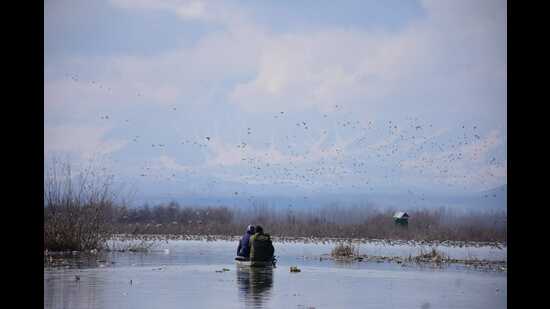
On the occasion of World Earth Day, environmental experts and legal professionals in Jammu and Kashmir have sounded a strong alarm over the rapid degradation of wetlands and green spaces, warning that unchecked urban expansion is pushing the region toward an ecological crisis.
Prominent environmental lawyer Nadeem Qadri, speaking to the news agency—Kashmir News Observer (KNO), said that the fast-paced growth in Srinagar and Jammu has come at a high environmental cost, with wetlands and natural green buffers being systematically destroyed.
“Wetlands are not wastelands—they are vital ecological assets. They store excess water, regulate floods, and support biodiversity. Their loss directly translates into increased flood risks, rising pollution levels, extreme heat, and the disappearance of wildlife,” he said.
Qadri said the consequences are already visible. “The highest cost we are paying is in the form of frequent flooding and deteriorating living conditions. If this trend continues, urban centres like Srinagar could face severe environmental stress in the coming years,” he warned. He called for strict enforcement against illegal constructions, restoration of degraded wetlands, large-scale plantation drives, and adherence to scientific urban planning.
Environmental expert and teacher Mudasir Ahmad highlighted the growing unpredictability of weather patterns in the Himalayan region. “Many of us can feel that something is changing. Winters are no longer the same, rainfall patterns have become erratic, and extreme weather events are becoming more frequent. These are clear indicators of a shifting climate,” he said.
He said the fragile Himalayan ecosystem is particularly vulnerable to such changes. “Unpredictable weather impacts everything, from faster melting of glaciers and uncertain water sources to crop failures and increased risks of floods and landslides. For communities dependent on agriculture, this is not just an environmental issue but a livelihood crisis,” Ahmad added. He said the pace of environmental change is accelerating, making immediate action crucial.
Meanwhile, Dr Aamir Hussain Bhat, a lecturer in Environmental Science, warned that the disappearance of wetlands has stripped Srinagar of its natural flood defence system. “Wetlands act like a sponge. Without them, floodwaters hit harder, summers become more intense, groundwater levels fall, and migratory birds stop arriving. What replaces them is concrete that absorbs heat and fails to manage water,” he explained.
Dr Bhat proposed a set of urgent measures, including declaring remaining wetlands as protected “no-touch zones,” reviving urban forests and recharge ponds, and halting construction on marshy land. “We need ecological planning, not cosmetic development. Parks alone won’t solve the problem—functional ecosystems will,” he said.
Noted geologist Dr Shakeel Ahmad Romshoo said that awareness has been raised over the last several years, but it is now time for action. He said that since 1969, awareness has been raised, but it is time for action now, and concerned authorities, along with people, need to act to save our fragile environment.
Experts stressed that Jammu and Kashmir stand at a critical juncture where development and environmental preservation must go hand in hand. They urged policymakers, planners, and the public to treat environmental protection as a priority rather than an afterthought.
“Protecting nature today means safeguarding our future,” they said, adding that Earth Day should serve as a wake-up call for collective action before the damage becomes irreversible—(KNO)