

Historic Test Call-Up Ends Decades of Waiting for a Village That Never Stopped Believing
Reyaz Rashid
SHEERI (Baramulla), Aug. 3: The first thing that greets visitors at the newly bought house of India’s newest Test cricketer in Sheeri village is not the sound of celebration—it is the quiet faith of an elderly grandmother whose prayers have finally been answered.
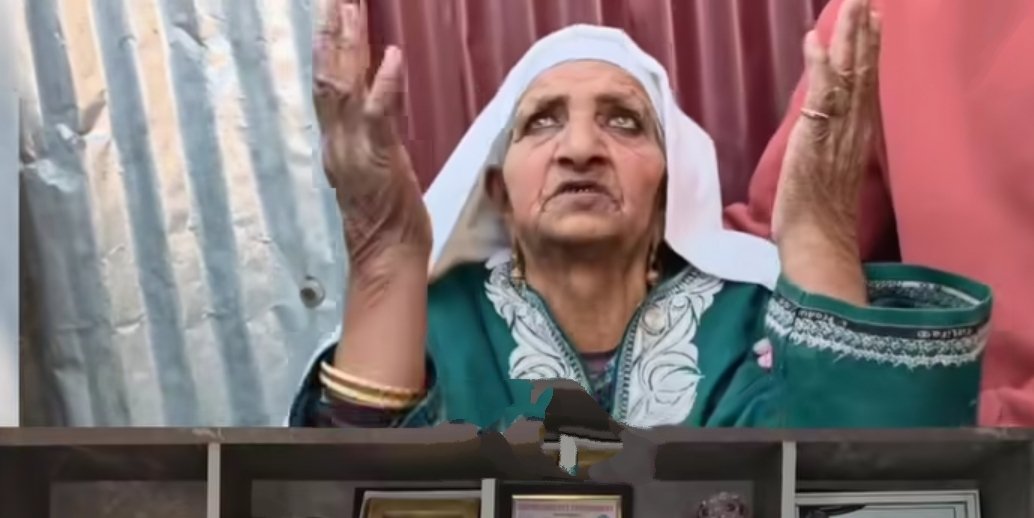
Sitting inside the modest family home near the Police Training Centre in Sheeri, her wrinkled fingers gently moving over a string of prayer beads, Fazi Begum, grandmother of Auqib Nabi Dar, could barely hold back her tears as television channels flashed the news that her grandson had been selected in India’s Test squad.
For years, she had offered the same prayer after every namaz: “May my grandson one day wear the Indian jersey.”On Monday, Almighty Allah answered those prayers.
India handed Jammu and Kashmir pace sensation Auqib Nabi Dar his maiden national call-up after premier fast bowler Jasprit Bumrah was ruled out of the upcoming two-Test series against Sri Lanka with a left knee injury. Bumrah has failed to recover fully despite rehabilitation at the BCCI Centre of Excellence in Bengaluru, prompting the selectors to draft in the 29-year-old Jammu and Kashmir pacer for the series beginning in Galle on August 15.
For Indian cricket, it was another team announcement but Sheeri village of Baramulla in Jammu and Kashmir, it was history in making indeed.For Sheeri village in north Kashmir’s Baramulla district, it was the culmination of decades of hope, sacrifice and unwavering belief.As the news spread across the village, jubilant residents poured out of their homes, celebrating the biggest sporting achievement ever witnessed by the village. Mobile phones rang incessantly as relatives, neighbours and well-wishers from across the country called to congratulate the family.Inside the house, however, the celebrations remained deeply emotional.
Grandmother Fazi Begum sat quietly before the television, smiling every time the camera showed Auqib. Beside her, his parents watched in silence, overwhelmed by the moment they had waited years to witness.Nearly 6 kilometers from Baramulla town, along the historic Jhelum Valley Road, lies the picturesque village of Sheeri village of Narvaw area.
On highway link road branching off the main road leads to Auqib’s newly bought home—a place that until now was known only to locals but has suddenly become one of the most celebrated sporting addresses in Jammu and Kashmir.Auqib has become the first cricketer from Jammu and Kashmir to earn a place in India’s Test squad, proving that extraordinary talent can emerge even from villages where cricket infrastructure remains minimal.
His journey did not begin in elite academies or state-of-the-art training centres. It started on dusty local grounds in Sheeri village, where young boys played with limited facilities, worn-out equipment and endless determination.Even today, proper cricket infrastructure remains scarce. To improve his bowling, Auqib often travelled nearly five kilometres to a small ground near Lower Jhelum across the river, spending countless hours perfecting his craft.
Those who know him say he never complained. He simply bowled again and again.Behind Auqib’s remarkable rise stands the unwavering discipline instilled by his father, Ghulam Nabi Dar.Reflecting on his son’s journey, he recalled the advice that became the guiding principle of Auqib’s career.“No excuses if you want to play for India,” he would repeatedly tell him.He father said that whether it was harsh winters, lack of facilities or limited opportunities, excuses were never acceptable it told my son and urged him that performance was the only answer.
Ironically, Ghulam Nabi once dreamed of seeing his son become a doctor rather than a cricketer.Like many Kashmiri parents, he believed medicine offered security and respect.There was even a time when he stopped Auqib from going out to play cricket. He locked him inside a room and tied him with a rope to prevent him from leaving for the playground.Around 2015, Auqib narrowly missed securing admission to a medical college by just two marks.
Looking back, Ghulam Nabi smiles at the memory.“Later, I realised how serious he was about cricket and allowed him to play. I too played cricket when I was young,” he says and that decision changed everything.Auqib’s performances over the past two domestic seasons forced the national selectors to take notice.
He claimed an astonishing 104 wickets across the last two Ranji Trophy seasons, including 60 wickets during the 2025-26 campaign, playing a decisive role in guiding Jammu and Kashmir to its historic maiden Ranji Trophy title.His outstanding performances included three five-wicket hauls, highlighted by a sensational 7 for 24 against Rajasthan, one of the finest spells produced by an Indian fast bowler during the season.Earlier, during the 2024-25 Ranji Trophy, he topped the national charts among fast bowlers with 44 wickets at an average of just 13.93, finishing behind only Vidarbha all-rounder Harsh Dubey in the overall wicket-taking list.His form continued during India A’s recent tour of Sri Lanka, where he picked up six wickets in two first-class matches in Galle, further strengthening his credentials ahead of India’s World Test Championship assignment.
Interestingly, Auqib had earlier travelled only as a standby player for India’s one-off Test against Afghanistan after narrowly missing a place in the main squad.This time, the selectors left no room for doubt.Despite becoming one of India’s most talked-about domestic fast bowlers, Auqib remains remarkably reserved.His cousin Bilal Ahmad describes him as a shy individual who rarely uses his phone and prefers watching cricket quietly with family.Bilal vividly remembers sitting beside Auqib in the same room during the IPL 2026 auction.
“Initially, no franchise raised a paddle.The room fell silent.Then Delhi Capitals entered the bidding.As franchise after franchise joined the race, the price climbed steadily before finally stopping at ₹8.40 crore, making Auqib one of the most expensive uncapped fast bowlers in IPL history,” he recalls. “We simply couldn’t believe it,” Bilal recalled.
He further said that within minutes, the entire village gathered outside the house. People danced. Drums echoed. Firecrackers exploded.But Auqib, true to his nature, never came outside despite watching the excitement of people and fans,” Bilal laughed.
Speaking to SNS Kashmir, an emotional Ghulam Nabi Dar struggled to describe his feelings.“I am thankful to Almighty Allah. This is the result of ten years of hard work. There were days when he even skipped meals just to continue training,” he said.For the family, money has never been the measure of success.
“Whatever price he received in the IPL does not matter to us. What truly matters is that he has reached the Indian team. This is a proud moment not only for our family but for Baramulla and the whole of Jammu and Kashmir,” Dar said.His phone continued ringing throughout the day as relatives, neighbours, journalists and well-wishers called from every corner to congratulate the family.Women from neighbouring houses arrived to embrace Auqib’s mother Mehmooda Begum and grandmother, offering sweets and heartfelt prayers.Auqib Nabi Dar’s rise is not merely the story of a fast bowler replacing Jasprit Bumrah.It is the story of a father who eventually trusted his son’s dream.A grandmother whose prayers never ceased.A village that refused to stop believing.A young man who travelled kilometres every day to practice on modest grounds. A cricketer who never allowed limited facilities to become an excuse.From Sheeri Star Cricket Club to BCC Reds, from Kashmir’s village grounds to the Ranji Trophy, from a ₹8.40 crore IPL contract with Delhi Capitals to the Indian Test team, Auqib has travelled a path that few thought possible.As India prepares to begin its Test series in Galle on August 15, millions will watch a promising fast bowler waiting for his opportunity.But back in Sheeri, people already know what they have witnessed.They have seen a dream nurtured in the narrow lanes of a small Kashmiri village rise all the way to the highest stage of Indian cricket.And inside that quiet home near the Police Training Centre, grandmother Fazi Begum no longer prays for her grandson to wear the Indian jersey.Now she prays only that he wears it with the same humility, determination and faith that carried him from the mountains of Kashmir to the summit of Indian cricket and pray for the best performance in upcoming test series. Show quoted text