

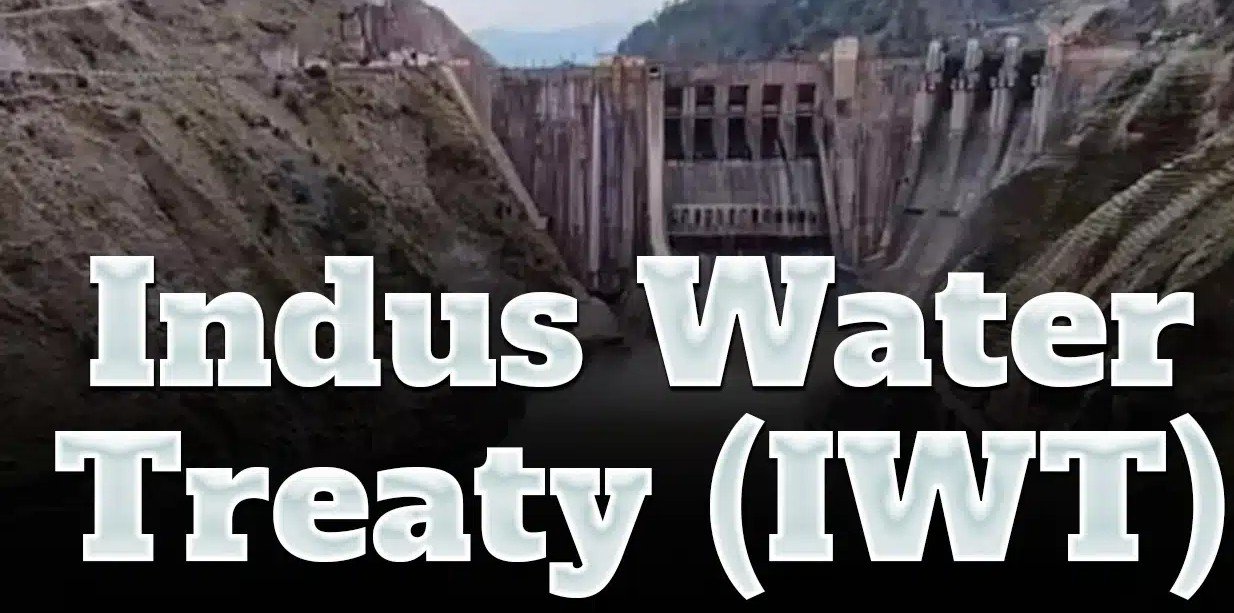
New Delhi, Aug 31 :
India on Monday rejected the order issued by the Permanent Court of Arbitration in The Hague on the status of the Indus Waters Treaty, asserting that the tribunal has “no jurisdiction” over New Delhi’s sovereign decisions and that its decision to keep the pact in abeyance remains in force.
In a statement, the Ministry of External Affairs, according to news agency—Kashmir News Observer (KNO), described the arbitration body as an “illegally constituted” court and said India does not recognise its existence in law.
The statement came after the Court of Arbitration said the Indus Waters Treaty remains in force and that India cannot unilaterally suspend or place it in “abeyance”.
India said it categorically rejects the latest award as well as previous pronouncements by the body.
“This so-called court was constituted by the World Bank in patent breach of the terms of the Treaty and India categorically rejects its so-called award, just as it has firmly rejected all prior pronouncements by this illegally constituted body,” the MEA said.
It said India has never appeared before the tribunal and has refused to take cognisance of its earlier pronouncements.
“India has never recognised the existence in law of this illegally-constituted and so-called Court of Arbitration, and has consistently maintained that the very establishment of this alleged arbitral body constitutes a grave violation of the Indus Waters Treaty,” it said.
The MEA further asserted that the tribunal had no authority to adjudicate on India’s sovereign decisions.
“This so-called Court of Arbitration has no jurisdiction whatsoever to pronounce on India’s sovereign decisions,” it said, adding that its present or future pronouncements would have no impact on India’s actions concerning projects being undertaken by the country.
The ministry also made clear that New Delhi’s decision to suspend the implementation of the Indus Waters Treaty has not been withdrawn.
“India’s decision to hold the Indus Waters Treaty in abeyance remains in force,” it said.
The treaty was placed in abeyance by India in April 2025, days after the Pahalgam terror attack in which 26 people were killed.
Notably, the Indus Waters Treaty, signed in 1960 with the World Bank’s assistance, allocates the eastern rivers — Ravi, Beas and Sutlej — for India’s unrestricted use, while Pakistan has rights over the western rivers — Indus, Jhelum and Chenab.
The Permanent Court of Arbitration, headquartered at the Peace Palace in The Hague, is an intergovernmental organisation established under the 1899 Hague Convention for the Pacific Settlement of International Disputes—(KNO)