

Participatory Planning, Women and Child Protection, Drug-Free Communities and Inclusive Rural Development Take Centre Stage
SRINAGAR, OCTOBER 2:
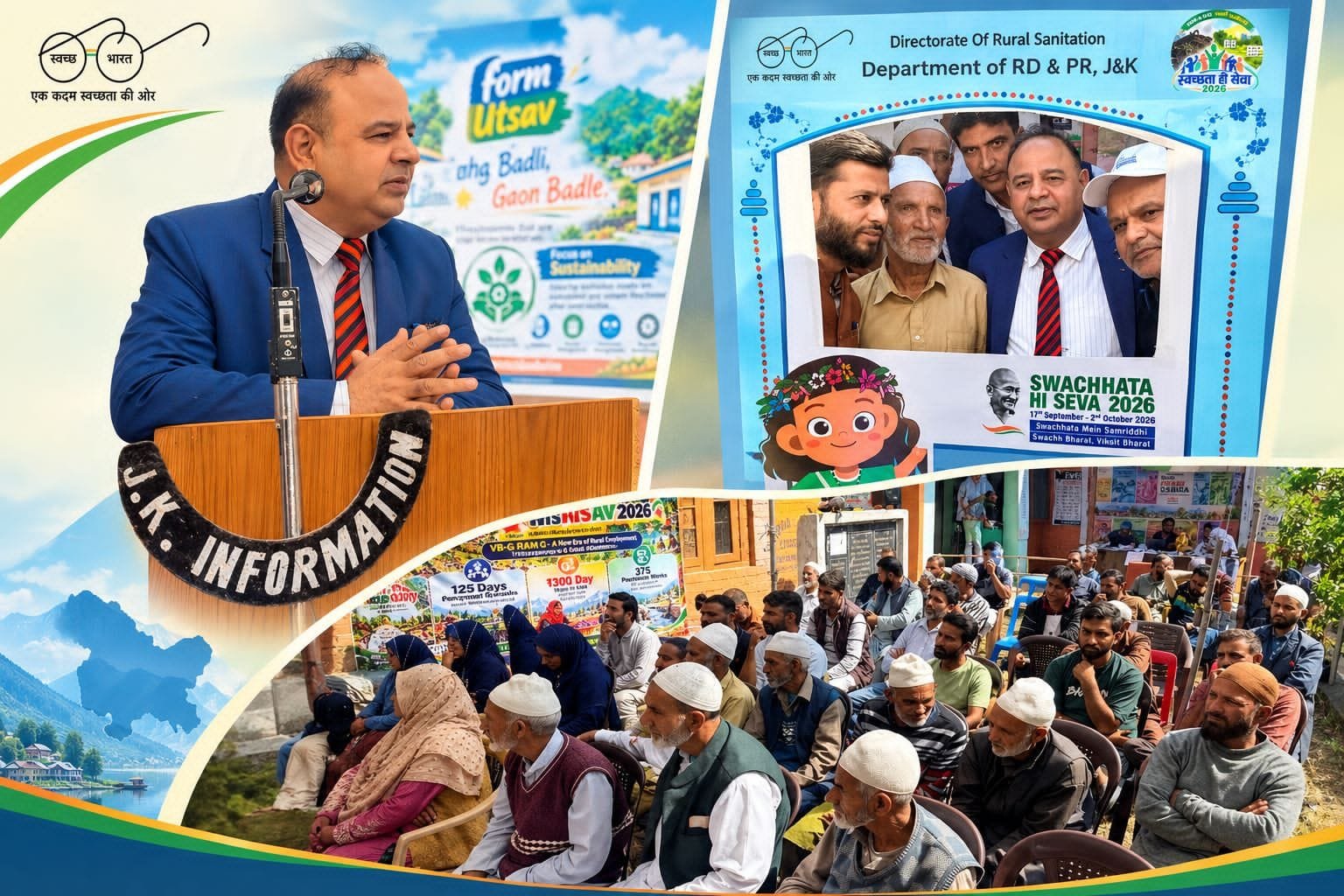
The Department of Rural Development and Panchayati Raj (RD&PR) on Thursday organised Special Gram Sabhas across all 4,291 Panchayats of Jammu and Kashmir to mark Gandhi Jayanti and observe Reform Utsav 2026, bringing local communities and the administration together for discussions on grassroots development and participatory governance.
The Special Gram Sabhas witnessed participation from Deputy Commissioners, senior civil and departmental officers, Panchayat representatives, officials of line departments, field functionaries, women, youth and local residents across the Union Territory.
The proceedings focused on strengthening people’s participation in local governance and ensuring that development priorities are identified through consultation with communities and incorporated into Panchayat Development Plans.
Deputy Commissioner Bandipora Indu Kanwal Chib, Deputy Commissioner Kathua Rajesh Sharma, Deputy Commissioners of Kulgam and Ramban and the Additional Deputy Commissioner Ramban participated in the Gram Sabha proceedings in their respective districts and interacted with local residents and Panchayat representatives.
‘Gram Sabha Must Remain at the Heart of Village Development’
Director, Rural Development, Kashmir, Riyaz Ahmad Wani, participated in the Special Gram Sabha held at Panchayat Choon in Budgam.
Addressing the gathering, Wani described the Gram Sabha as a key platform through which citizens can directly participate in local governance and influence the development priorities of their villages.
He stressed that Panchayat Development Plans should emerge from genuine public consultation and reflect the needs of all sections of society, particularly women, children, senior citizens, persons with disabilities, Scheduled Castes, Scheduled Tribes and other vulnerable groups.
“Development planning cannot be confined to offices. It must begin in the Gram Sabha, where citizens identify their needs, discuss priorities and collectively decide the future course of their Panchayat. Every voice must be heard, and no section of society should remain excluded from the planning and development process,” he said.
Wani further emphasised that Special Gram Sabhas should not be treated as merely formal meetings but should function as effective platforms for social accountability, public participation and responsive governance.
He said the spirit of “Sabki Yojana, Sabka Vikas” underlines the importance of people-led planning, transparency, accountability and collective ownership of rural development.
Drug-Free Panchayats and Community Action Discussed
A major focus of the Gram Sabhas was the Nasha Mukt Bharat Abhiyan, with participants discussing the role of Panchayats, families, educational institutions, youth groups and community organisations in preventing substance abuse.
Citizens were sensitised about the social, economic and health consequences of drug addiction, while emphasis was laid on early intervention, counselling, rehabilitation and sustained community-level vigilance.
The discussions highlighted the importance of involving young people and local institutions in creating healthier and drug-free communities.
Sanitation, Waste Management on Gram Sabha Agenda
As Swachhata Hi Seva 2026 culminated on Gandhi Jayanti, sanitation and responsible waste management also featured prominently in the proceedings.
The Gram Sabhas discussed provisions and community-level implications of the Solid Waste Management Rules, 2026, with emphasis on segregation of waste at source, scientific disposal, cleanliness of public spaces and sustainable operation and maintenance of sanitation assets.
Residents were encouraged to take greater ownership of sanitation initiatives and ensure that cleanliness efforts are sustained beyond awareness campaigns.
Residents Raise Local Development Priorities
The Special Gram Sabhas also provided a platform for residents to discuss a wide range of local issues, including drinking water, sanitation, roads, education, healthcare, social welfare, livelihood opportunities, environmental conservation and delivery of essential public services.
Residents were given an opportunity to raise grievances, submit demands and suggest developmental works for possible inclusion in their respective Panchayat Development Plans.
Officials of line departments briefed communities about government schemes, eligibility criteria and available services. The participation of multiple departments also facilitated greater convergence for addressing local issues through coordinated planning and effective utilisation of available resources.
RD&PR Stresses Sashakt and Atmanirbhar Panchayats
The Department reiterated that informed and participatory Gram Sabhas are essential for building Sashakt Panchayats, Atmanirbhar Panchayats and Viksit Panchayats, thereby contributing to the broader national objective of Viksit Bharat.
Officials urged citizens to actively participate in the preparation of Panchayat Development Plans so that the plans accurately reflect the needs, challenges and aspirations of local communities.
Senior Officers Visit Panchayats Across J&K
Additional Secretary, RD&PR, Wasim Raja, visited Panchayat Drudhu in Bhaderwah Block, where he interacted with residents, Panchayat functionaries and representatives of line departments and took feedback on local development priorities.
In Ganderbal, Joint Director, Rural Development Department, Mantasha Rashid, visited a Panchayat and interacted with members of the local community.
Senior officers, RD&PR teams and officials from various line departments visited Panchayats across Jammu and Kashmir to facilitate the proceedings, assess community participation and ensure that the concerns and aspirations raised by residents were properly documented.
The Department said the Special Gram Sabhas reaffirmed the importance of grassroots democracy, transparent governance and community-led development, with Panchayats positioned as key institutions for translating local priorities into tangible development outcomes.