

Retrospective Effect From March 2026 Proposed: Recently Retired Judicial Officers May Be Restored to Service
Formal Orders Expected after LG’s Approval,Move to Extend Tenure of Serving Judicial Officers
JAMMU, OCTOBER 3 :
In a significant development concerning the subordinate judiciary in Jammu and Kashmir, the Union Territory Government has cleared a proposal to enhance the age of superannuation of Judicial Officers from 60 to 62 years, with the proposed amendment taking effect retrospectively from March 2026.
The proposal, once formally notified after completion of the requisite approval process, is expected to have implications for both serving Judicial Officers and those who have retired from service since March 2026.
PROPOSAL CLEARED BY J&K CABINET
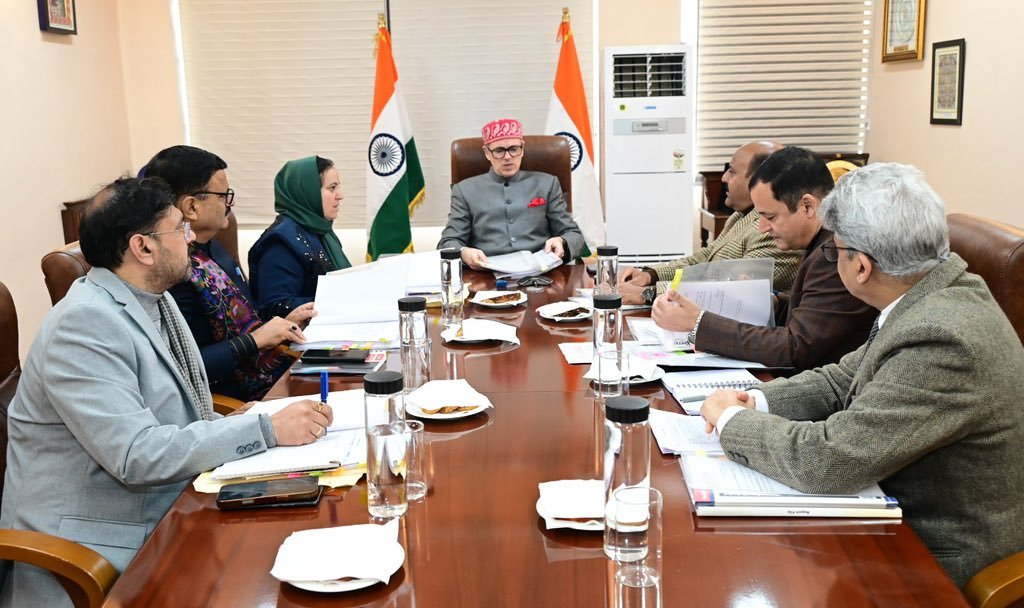
Official sources said the proposal was considered and cleared by the Jammu and Kashmir Cabinet headed by Chief Minister Omar Abdullah, who also holds the portfolio of Law, Justice and Parliamentary Affairs.
The proposal has subsequently been placed before Lieutenant Governor Manoj Sinha for the requisite approval. Following completion of the approval process, the Law, Justice and Parliamentary Affairs Department is expected to issue a formal government order.
Sources said the final notification would specify the precise legal and administrative mechanism for implementing the enhanced retirement age, including the position of officers who have already retired during the proposed retrospective period.
RETROSPECTIVE IMPLEMENTATION FROM MARCH 2026
One of the most consequential aspects of the proposal is its proposed retrospective applicability from March 2026.
If incorporated in the final government order, Judicial Officers who retired on or after March 2026 could become eligible for restoration or continuation in service, subject to the conditions and procedure prescribed by the Government.
The proposed amendment would also enable serving Judicial Officers to continue in office until attaining the revised superannuation age of 62 years.
RECENTLY RETIRED JUDICIAL OFFICERS MAY RETURN TO SERVICE
The retrospective provision could have a direct bearing on Judicial Officers who have already superannuated since March 2026.
Such officers may be required to undergo the prescribed administrative process for reinstatement or restoration of service, depending upon the terms ultimately incorporated into the notification.
The final order is expected to clearly delineate the eligibility criteria, effective date, continuity of service and other consequential matters.
PROPOSED RETIREMENT AGE TO BRIDGE GAP WITH HIGH COURT JUDGES
At present, Judicial Officers serving in the district judiciary retire upon attaining the age of 60 years.
The proposed enhancement to 62 years would bring the superannuation age of Judicial Officers closer to that applicable to High Court Judges, who ordinarily retire at the age of 62 years. Judges of the Supreme Court of India retire at the age of 65 years.
The proposed measure is therefore being viewed as a significant structural change in the service conditions governing the subordinate judiciary in Jammu and Kashmir.
MOVE FOLLOWS SUPREME COURT’S OBSERVATIONS
The development comes against the backdrop of observations made by the Supreme Court of India regarding the retirement age of Judicial Officers serving in the district judiciary.
The apex court had urged States and Union Territories to reconsider the existing age of superannuation of Judicial Officers and examine the feasibility of enhancing it to 62 years.
A Bench comprising Chief Justice of India Surya Kant and Justices Joymalya Bagchi and V. Mohana had emphasised the need for governments to revisit the issue in view of the relatively late age at which Judicial Officers enter judicial service.
FINANCIAL CONSIDERATIONS SHOULD NOT OVERRIDE JUDICIAL SERVICE REQUIREMENTS
During the proceedings, the Supreme Court also addressed concerns relating to the financial implications of extending the service tenure of Judicial Officers.
The Court indicated that financial considerations alone should not constitute a decisive ground for rejecting enhancement of the retirement age, and called upon governments to reconsider the issue independently of the retirement age applicable to other categories of government employees.
The observations underscored the distinct nature of judicial service and the experience accumulated by Judicial Officers during their tenure in the district judiciary.
LARGE NUMBER OF JUDICIAL OFFICERS LIKELY TO COME WITHIN AMBIT
The proposed amendment is expected to benefit a substantial number of Judicial Officers across Jammu and Kashmir, particularly those presently in service and those who retired during the period covered by the proposed retrospective implementation.
However, the exact number of beneficiaries and the mechanism for restoration of recently retired officers would become clear only after issuance of the final government notification.
FORMAL NOTIFICATION AWAITED
With the Cabinet having cleared the proposal and the matter placed for the requisite approval, the formal government order is now awaited.
The notification is expected to settle the effective date, eligibility conditions, restoration of recently retired Judicial Officers and other consequential service matters.
The proposed enhancement from 60 to 62 years marks a significant change in the service framework governing Judicial Officers in Jammu and Kashmir and, if formally notified, would extend the judicial careers of serving officers while potentially reopening the service status of those who retired from March 2026 onwards.KNC)