

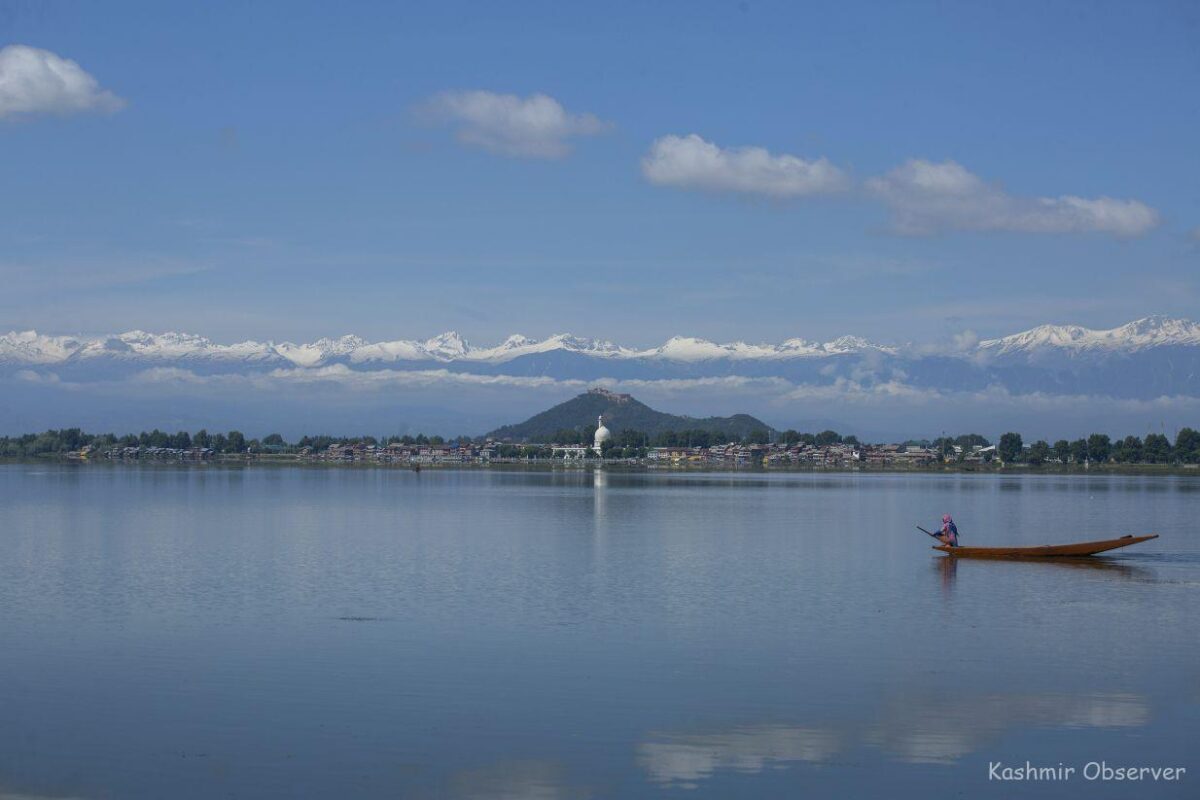
Encroachments rise, sewage flows untreated, conservation projects delayed, audit flags weak governance, shrinking water spread and deteriorating ecology of lake
Sajid Raina
Srinagar, Apr 10 :
Dal Lake has lost more than 10 per cent of its open water area over the past decade, with a government audit flagging encroachments, untreated sewage and weak monitoring as key factors behind its ecological decline.
According to a report of the Comptroller and Auditor General of India (CAG) in possession of the news agency—Kashmir News Observer (KNO), the lake’s open water spread reduced from 15.40 square kilometres in 2007 to 12.91 square kilometres in 2020, marking a decline of 10.15 per cent.
The audit noted that the shrinking water area coincided with an increase in human activity within and around the lake.
Floating gardens expanded significantly, while areas under cultivation and plantations also grew during the period under review. Built-up spaces saw a rise, indicating increasing habitation and infrastructure pressure on the lake.
Encroachments in many main areas were identified as major contributors to these changes, with the expansion of floating gardens and settlements reducing the lake’s water surface.
The report pointed to untreated sewage as another major concern. Despite investments exceeding Rs 45 crore in sewage treatment plants (STPs), waste continued to flow into the lake due to incomplete sewerage networks and delays in connecting households and houseboats.
The audit further highlighted gaps in the functioning of the Lakes Conservation and Management Authority (LCMA), stating that it failed to regulate land use effectively or assess the reasons behind the rapid changes in the lake’s ecosystem.
Key conservation initiatives taken up under central schemes, including the National Lake Conservation Programme and the Prime Minister’s Reconstruction Programme, were found to be delayed or inadequately implemented.
Works related to relocation of houseboats and hotels, dredging of acquired land, and catchment area management remained incomplete, while even the executed components did not meet prescribed standards, the report said.
The CAG also flagged underutilisation of funds between 2017 and 2022, attributing it to irregular board meetings and the absence of adequate project management mechanisms.
The report warned that nutrient inflow from untreated waste has accelerated the growth of weeds, further reducing open water and deteriorating water quality.
Calling for urgent corrective measures, the audit recommended a comprehensive lake management policy, improved monitoring of water spread, proper functioning of sewage treatment systems and faster execution of conservation works.
Without systemic improvements in planning and implementation, the report cautioned, restoration of the lake’s ecological health may remain difficult—(KNO)