

Division Bench rules J&K lacked legislative competence to levy tax on electricity generation; quashes demand notices and bars government from imposing such charges under the 2010 Ac
SRINAGAR, Oct 29:
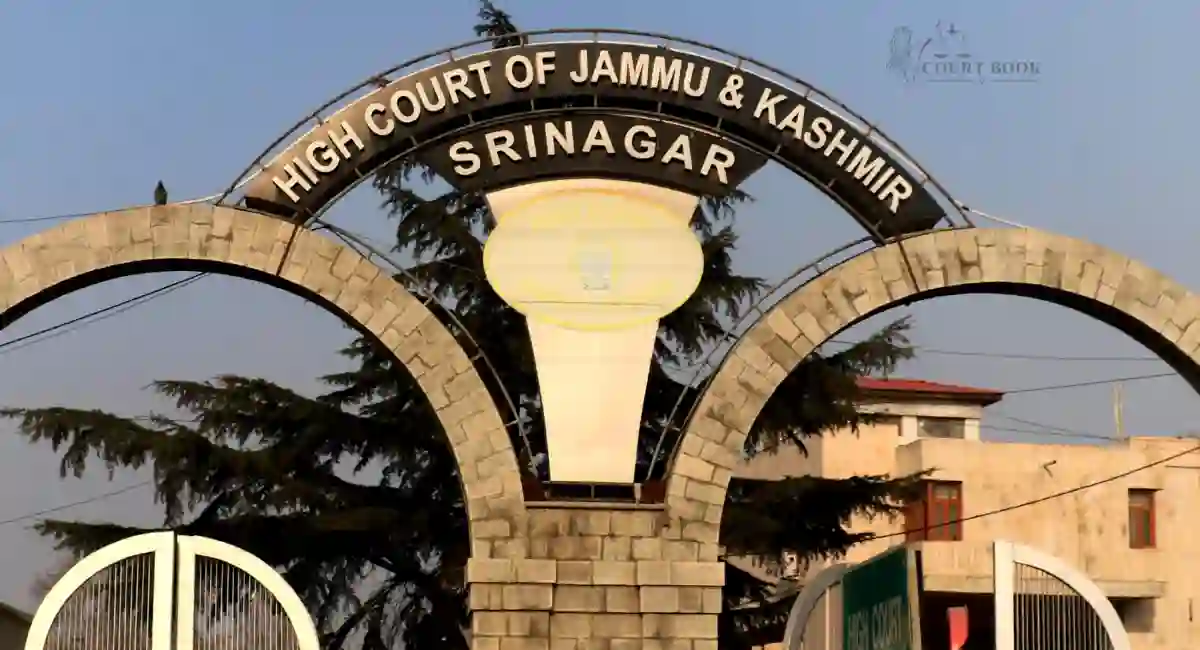
The High Court in a well celebrated judgment declared the levy of water usage charges on hydropower projects under the Jammu and Kashmir Water Resources (Regulation and Management) Act, 2010 as unconstitutional.
The court has ruled that the charges were, in substance, a tax on electricity generation that the erstwhile state legislature lacked the competence to impose such charges.
The Division Bench of Justice Sanjay Dhar and Justice Rajnesh Oswal allowed three writ petitions filed by independent power producers, declaring the impugned provisions unconstitutional to the extent they authorised the levy of water usage charges on hydropower projects.
The court quashed the demand notices issued against the petitioners and restrained the J&K government from imposing any tax on electricity generation under the guise of water usage charges or any other tax.
The petitions were filed by 13 companies, questioning the legality of the charges imposed under the 2010 Act. The Union of India also maintained that the state legislature was not competent to impose a tax on electricity generation, as the relevant constitutional entry empowers states to tax the consumption or sale of electricity, but not its generation.
The J&K Government, however, defended the levy, arguing that water resources fell within the legislative domain of the state and that the charges were regulatory in nature.
The court observed that the nature of a levy had to be determined by its substance and actual operation rather than the nomenclature assigned to it.
The Bench noted that the charges were calculated with reference to the head height from which water was used to propel turbines, rather than the quantity of water drawn or consumed. This, the court held, indicated
that the levy was not linked to any specific service rendered to the hydropower projects, the court concluded that it possessed the character of a tax rather than a water usage fee.
The Bench held that the erstwhile state legislature lacked the competence to impose such a tax when the legislation was enacted in 2010. It also rejected the argument that the subsequent adoption of the law under the Jammu and Kashmir Reorganisation Act, 2019, could validate a provision that was unconstitutional at its inception.
Accordingly, the court held the relevant provisions of the 2010 Act ultra vires the Constitution and struck them down insofar as they imposed water usage charges on the petitioners’ hydropower projects.