

PM Modi Calls for Unified Global Action Against Terrorism; Anti-Narcotics, AI, Climate and Energy Cooperation Also Strengthened
Bishkek, September 1:
India on Tuesday highlighted 13 major outcomes of the Shanghai Cooperation Organisation (SCO) Summit held in Bishkek, with enhanced cooperation against terrorism, extremism, organised crime and other transnational security threats emerging as a key focus.
The Ministry of External Affairs (MEA) said the SCO approved regulations for establishing a “Universal Centre for Countering Challenges and Threats to the Security of SCO Member States.” The proposed mechanism is aimed at improving coordination and information-sharing among member countries in dealing with terrorism, extremism, organised crime and other emerging security challenges.
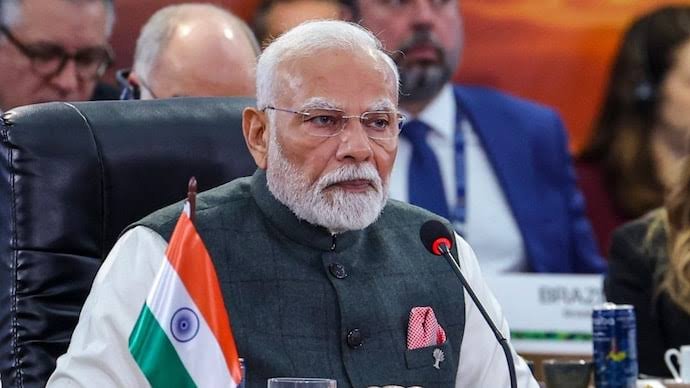
The security-related decision assumes particular significance in the backdrop of Prime Minister Narendra Modi’s strong remarks on terrorism during the summit. Addressing the gathering in the presence of Pakistani Prime Minister Shehbaz Sharif, Chinese President Xi Jinping and other SCO leaders, Modi called for a united approach against countries that use terrorism as an instrument of state policy.
Modi urged SCO members to work collectively to dismantle the ecosystem supporting terrorism, including terror financing, recruitment, radicalisation and safe havens, while stressing that there should be no double standards in the fight against terrorism.
Bishkek Declaration Gives India Wider Regional Platform
Among the other major outcomes was the Bishkek Declaration, which provides a platform for India to articulate its positions on regional security, development and connectivity while deepening engagement with Central Asia and the wider Eurasian region.
The SCO also approved a protocol containing amendments and additions to its Charter. According to the MEA, the decision will allow India to contribute to the organisation’s evolving institutional framework and supports the inclusion of English within the SCO framework.
The SCO, established in 2001, is a major Eurasian grouping focused on security, counter-terrorism, economic cooperation and political coordination. Its membership has expanded over the years and currently includes India, Pakistan, China, Russia, Iran, Belarus, Kazakhstan, Kyrgyzstan, Tajikistan and Uzbekistan.
Focus on Drug Trafficking and Narco-Terrorism
The summit also approved regulations for the Executive Committee of the SCO Anti-Narcotics Centre, aimed at facilitating closer coordination between member states against cross-border drug trafficking and narco-terrorism.
Two additional programmes were highlighted—one on combating drug addiction up to 2030 and another dealing with the proliferation of synthetic drugs and their precursors.
The first programme seeks to promote the exchange of best practices in drug prevention, treatment and rehabilitation, while the second is intended to strengthen information-sharing and operational coordination among enforcement agencies.
Energy Cooperation Receives Fresh Push
Energy cooperation also featured prominently among the summit outcomes.
The SCO adopted statements on energy conservation, energy efficiency and the development of energy systems, creating opportunities for member states to exchange technology, expertise and best practices.
The measures are also aimed at supporting the modernisation and resilience of energy systems across the SCO region, according to the MEA.
Disaster Management and Crime-Fighting Cooperation
Another important outcome concerned assistance to countries affected by emergencies. The SCO statement provides for greater sharing of expertise and capacity-building in disaster management, humanitarian assistance and disaster relief.
The member states also moved to amend the 2010 agreement on cooperation in combating crime. The amendment is intended to strengthen coordination among law-enforcement agencies in tackling organised and cross-border crime.
Climate Change and Artificial Intelligence on SCO Agenda
Cooperation on climate change was another major component of the summit outcomes. An MoU between SCO member states provides a framework for collaboration on climate adaptation and mitigation, climate-resilient development and technology.
The SCO also adopted an MoU on cooperation in the information sector, aimed at strengthening institutional exchanges and facilitating wider dissemination of India’s perspectives and initiatives within the organisation’s information space.
The final outcome highlighted by the MEA was an MoU on artificial intelligence cooperation. It is expected to create opportunities for India to share its digital and AI expertise, promote responsible and inclusive use of artificial intelligence, and expand technology and innovation partnerships among SCO countries.
The 13 outcomes collectively underline India’s emphasis on counter-terrorism, regional security, economic and energy cooperation, anti-narcotics efforts, climate action and emerging technologies, as the SCO seeks to expand practical cooperation among its member states.(KNC)