

Conflicting test results of 10-year-old trigger Health Department crackdown; lab sealed as patients allege unethical practices, tout network and lack of regulatory oversight**
Inayat Qayoom
BARAMULLA, July 3:
The mushrooming and largely unregulated growth of private clinical laboratories in Baramulla has come under intense scrutiny after an allegedly incorrect thyroid test report issued to a 10-year-old boy exposed serious irregularities in diagnostic services, prompting the Health Department to seal a private laboratory and sparking widespread concern over patient safety.
The case has reignited debate over the unchecked proliferation of private diagnostic laboratories in the district, with residents alleging poor quality control, inadequate regulatory monitoring and the presence of agents who allegedly lure patients from Government Medical College (GMC) Baramulla to selected private laboratories.
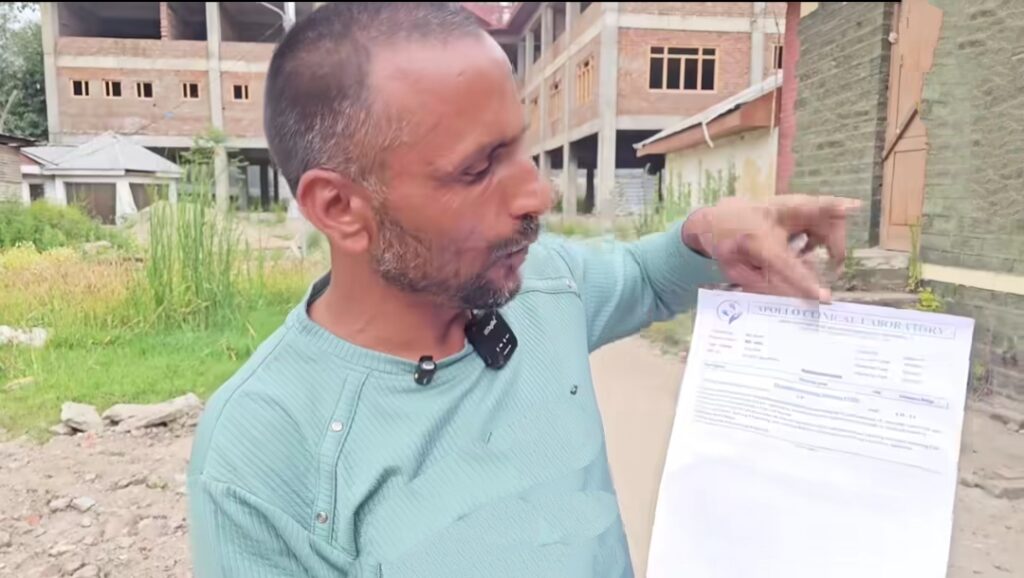
The incident involved a 10-year-old boy from Naushera, Boniyar, Uri, who was taken to GMC Baramulla for medical consultation. The attending physician advised a thyroid profile test, following which the family approached a private diagnostic laboratory situated near the hospital.
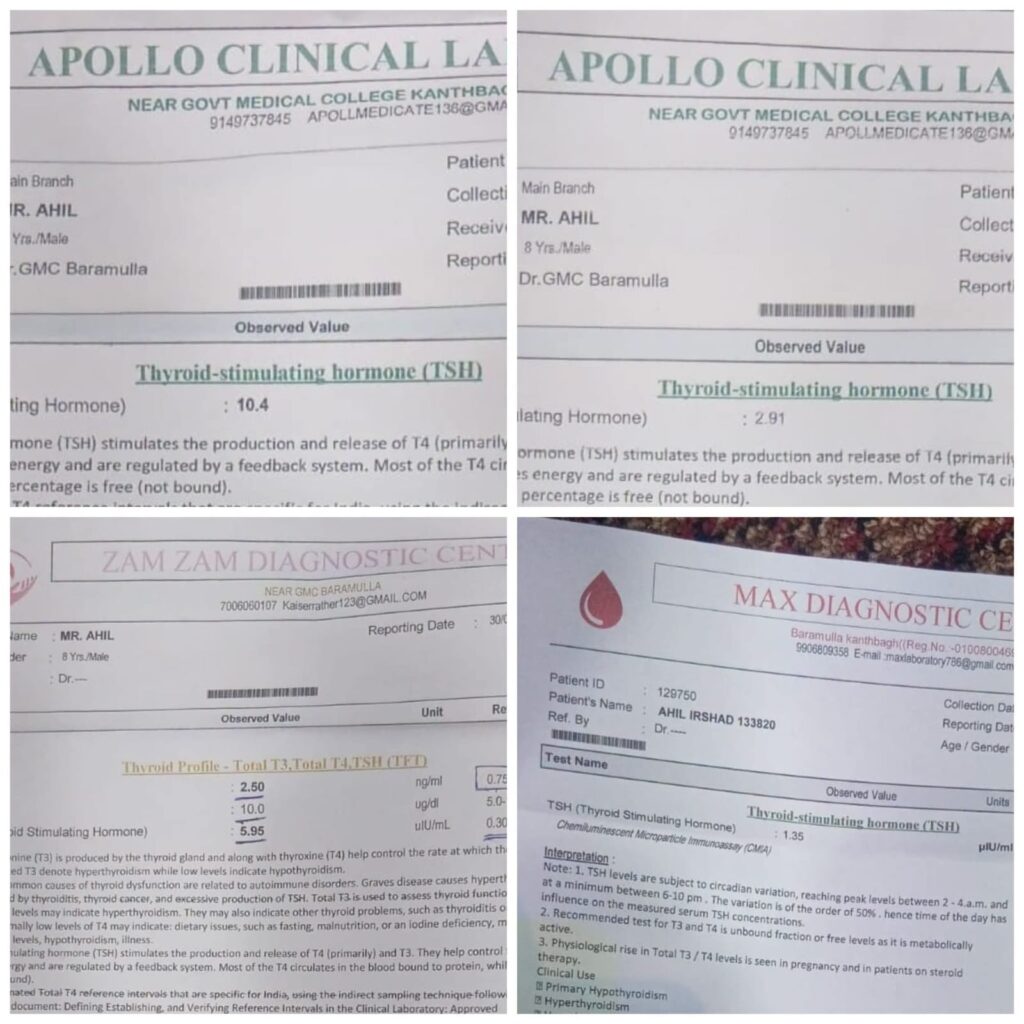
According to the family, the laboratory reported the child’s Thyroid Stimulating Hormone (TSH) level at 10, indicating a possible thyroid disorder requiring further medical attention. However, the treating doctor reportedly found the report inconsistent with the child’s clinical condition and advised the family to repeat the investigation elsewhere.
The family subsequently got the thyroid profile repeated at two other private diagnostic laboratories. The repeat reports showed TSH values of 2.91and 1.35, both within the normal range and consistent with the child’s clinical assessment, raising serious doubts over the accuracy of the initial report.
“We were terrified after seeing the first report because it suggested our child Ahil Irshad had a thyroid disorder. The doctor himself was not convinced and advised us to repeat the test. The later reports were completely different. If we had relied only on the first report, our child could have been subjected to unnecessary treatment,” said father of the child Irshad Ahmad
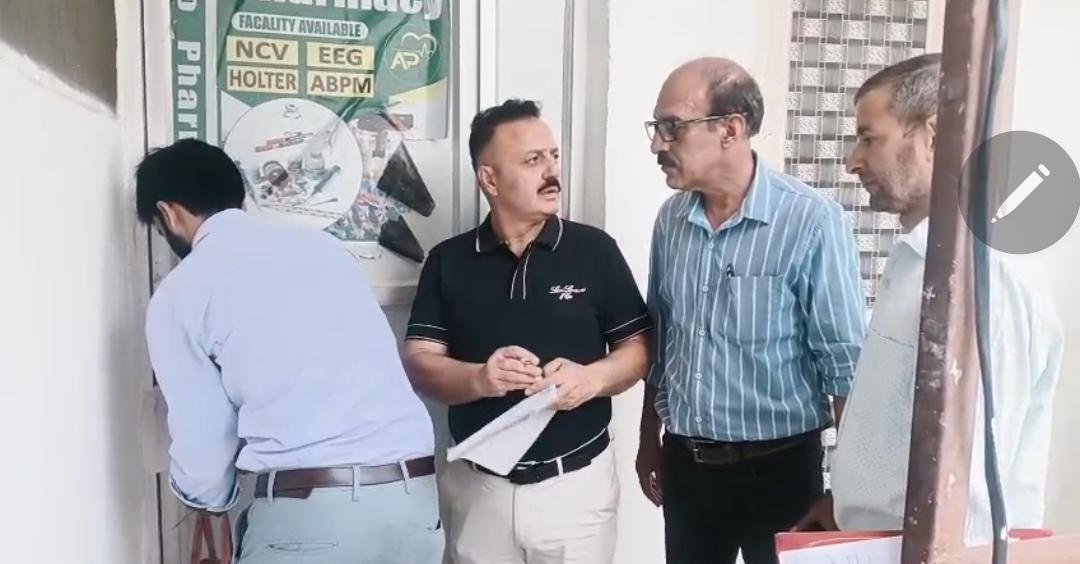
As details of the incident spread on social media, the Chief Medical Officer (CMO), Baramulla, constituted a high-level inspection team headed by In-charge District Health Officer Dr. Mohammad Iqbal Shah, along with the concerned Block Medical Officer, to investigate the matter.
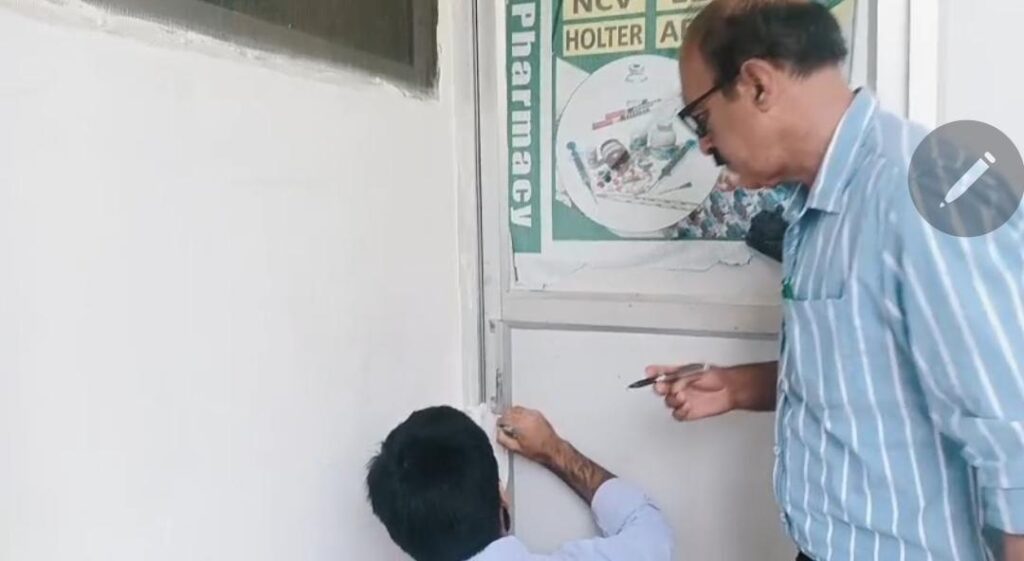
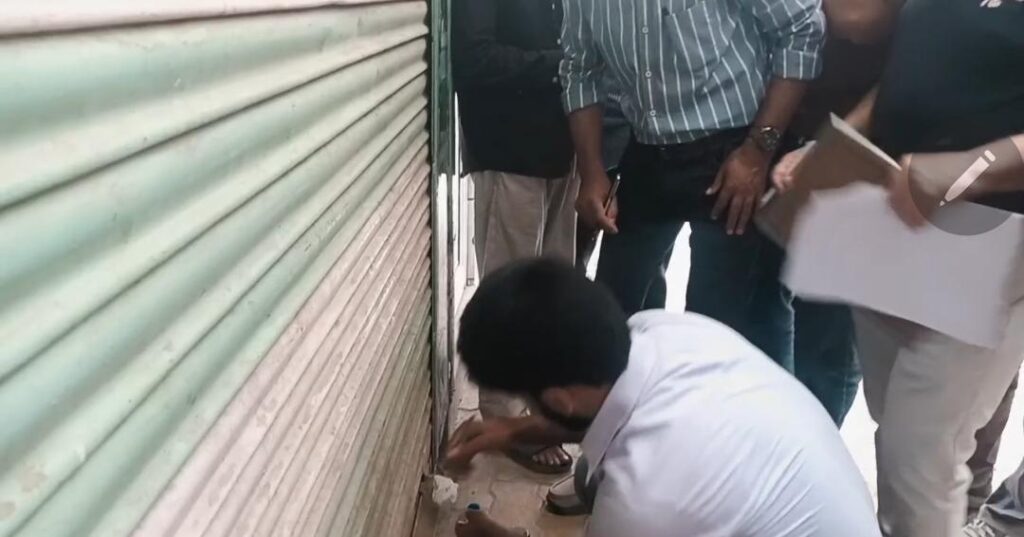
Official sources said the inspection team found several violations of prescribed health and regulatory norms during the inspection. Acting on the findings, the authorities immediately sealed the laboratory and initiated further legal and departmental proceedings.
The incident has once again drawn attention to the rapid increase in the number of private clinical laboratories across Baramulla. Residents allege that several laboratories are operating without adequate quality assurance systems, qualified technical staff or strict adherence to mandatory diagnostic standards.
Equally worrying, according to patients and attendants, are allegations that agents representing private laboratories frequently roam around the Outpatient Department (OPD) of Government Medical College Baramulla and persuade patients to undergo investigations at specific private laboratories, allegedly in return for commissions.
“Almost every patient coming out of the OPD is approached by someone recommending a particular laboratory. It has become a common sight. The authorities should investigate whether these people are working as agents because patients should never be influenced in matters concerning their healthcare,” said a patient Raja Begum waiting outside the hospital.
Another attendant Asima Bano said, “Many poor families borrow money for medical investigations. If laboratory reports cannot be trusted, it directly puts patients’ lives at risk. The government must ensure strict quality checks.”
A senior citizen from Baramulla Prof. Jalal Din said diagnostic reports form the basis of treatment decisions and even minor errors can have serious consequences.
“A wrong laboratory report can lead to unnecessary medicines, delayed diagnosis, mental stress and financial loss. Healthcare cannot be allowed to function without accountability,” he said.
Another resident Manzoor Ahmad questioned the absence of effective monitoring.
“Private laboratories have increased rapidly over the last few years, but inspections appear to be rare. Every laboratory should undergo regular quality audits and surprise inspections to protect the public,” he added.
Health experts say laboratory investigations play a decisive role in diagnosing diseases and determining treatment protocols. Errors in diagnostic reports can result in misdiagnosis, inappropriate medication, avoidable complications and unnecessary expenditure.
The latest incident has triggered widespread public outrage, with residents demanding a comprehensive district-wide audit of all private diagnostic laboratories. They have urged the Health Department to verify registrations, inspect equipment, examine the qualifications of technical staff and take stringent action against laboratories violating prescribed norms.
People have also demanded an inquiry into the alleged presence of touts around government hospitals and called for strict action against anyone found exploiting patients through unethical referral practices.
Citizens further urged the government to introduce a uniform rate list for diagnostic investigations, strengthen regulatory oversight through periodic inspections and ensure that only licensed, fully equipped and quality-certified laboratories are permitted to operate.
For many residents, the case is not merely about one incorrect report but about restoring public confidence in a diagnostic system on which thousands of patients depend every day.SNS