

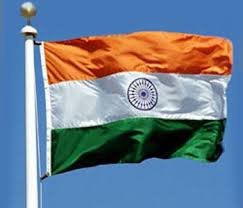
Advises mass awareness to prevent improper display and disposal of National Flag
New Delhi, August 10:
The Ministry of Home Affairs (MHA) has written to the Chief Secretaries and Administrators of all State Governments and Union Territory Administrations, as well as the Secretaries of all Ministries and Departments of the Government of India, directing them to ensure strict compliance with the provisions of the Flag Code of India, 2002, and the Prevention of Insults to National Honour Act, 1971.
In a communication issued from Kartavya Bhawan-3, New Delhi, dated August 10, 2026, the Ministry emphasised that the Indian National Flag represents the hopes and aspirations of the people of the country and occupies a position of honour and respect.
The Ministry observed that despite universal respect and loyalty towards the National Flag, a perceptible lack of awareness is often noticed among members of the public as well as organisations and government agencies regarding the laws, practices and conventions governing the display and use of the Tricolour.
The MHA said copies of the Flag Code of India, 2002, as amended in 2021 and 2022, and the Prevention of Insults to National Honour Act, 1971, are available on the Ministry’s website.
Paper flags should not be thrown on ground
The Ministry specifically directed the authorities to ensure that paper National Flags used by the public during important national, cultural and sports events are not discarded or thrown on the ground after the events.
It stated that such flags should be disposed of privately and in a manner consistent with the dignity of the National Flag.
The direction assumes significance ahead of national and public celebrations, when large numbers of paper flags are distributed and used by the public.
Mass awareness programmes ordered
The MHA has also asked the concerned governments and departments to undertake mass awareness programmes regarding the proper use and display of the National Flag.
It further called for giving the awareness campaign wide publicity through advertisements in electronic and print media so that people are made aware of the provisions governing the Tricolour.
Key provisions of Flag Code highlighted
The communication enclosed the salient features of the Flag Code of India, 2002. According to the document, the National Flag symbolises the country’s national pride and should always be accorded dignity and honour.
The Flag Code provides that the National Flag may be hoisted or displayed by members of the public, private organisations and educational institutions on all days and occasions, ceremonial or otherwise, subject to maintaining its dignity and honour.
Following amendments, the National Flag can be made of hand-spun and hand-woven or machine-made cotton, polyester, wool, silk or khadi bunting, as prescribed under the Code.
The Ministry also highlighted the 2022 amendment under which, where the Flag is displayed in the open or on the house of a member of the public, it may be flown during both day and night.
The Flag must be rectangular in shape, with the ratio of its length to height (width) being 3:2, and whenever displayed, it should occupy a position of honour and be distinctly placed.
The MHA further stated that a damaged or dishevelled National Flag should not be displayed.
Restrictions on display also reiterated
The enclosed provisions further state that the National Flag should not be flown from a single masthead simultaneously with any other flag or flags.
It should not be flown on vehicles except those of dignitaries specified under the Flag Code, including the President, Vice-President, Prime Minister and Governors, among others.
The Code also provides that no other flag or bunting should be placed higher than, above, or side by side with the National Flag.
The Ministry’s latest communication has been circulated to a wide range of constitutional, statutory and government authorities, including the President’s Secretariat, Vice-President’s Secretariat, Prime Minister’s Office, Cabinet Secretariat, Election Commission of India, Lok Sabha and Rajya Sabha Secretariats, Supreme Court and High Courts, Comptroller and Auditor General of India, Union Public Service Commission, Central Vigilance Commission and NITI Aayog, besides offices and subordinate establishments of the Ministry of Home Affairs.
The communication was issued by Kamlesh Rabidas, Under Secretary to the Government of India, on behalf of the Ministry of Home Affairs.(KNC)